20 Best Handmade Jobs Safe Against Artificial Intelligence
Discover the most resilient artisanal and manual careers that defy automation through human creativity, complex dexterity, and emotional intelligence.
Crafting custom wood pieces requires an intimate understanding of grain, structural integrity, and personal client aesthetics that mass-produced algorithms cannot replicate.
The ancient art of forging metal involves tactile feedback and heat management that demands a level of physical intuition and improvisation far beyond current robotics.
Repairing and creating intricate jewelry requires microscopic precision and the ability to handle unique, fragile gemstones that vary in every setting.
Building with natural stone requires selecting pieces based on weight, shape, and visual harmony, a task involving complex spatial reasoning and physical endurance.
Restoring historical structures requires solving unique puzzles found in centuries-old joinery, necessitating a deep respect for heritage materials.
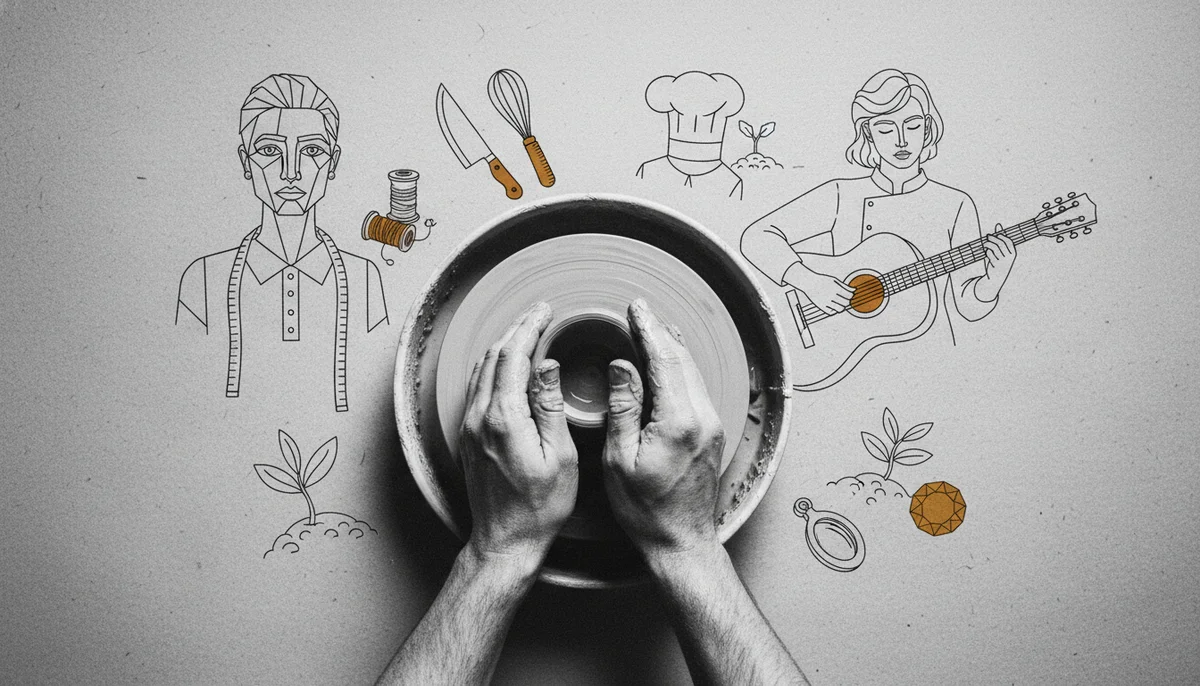
A bespoke tailor fits garments to the unique contours of the human body, using touch and drape to create a silhouette that standardized patterns cannot achieve.
The transformation of clay on a wheel is a sensory experience where the potter responds to the material's moisture and resistance in real-time.
Developing complex flavor profiles in aged cheese relies on a 'nose' and 'palate' that sensors cannot mimic, along with manual curd management.
Arranging perishable, organic materials into aesthetic compositions requires a human sense of occasion and a delicate touch for fragile flora.
Horology involves diagnosing mechanical issues in one-of-a-kind movements where parts must often be hand-machined to original specifications.
Hand-sewing leather using techniques like the saddle stitch provides a level of durability and character that machine-stitched products lack.
Building and repairing stringed instruments requires a master's ear to calibrate wood density and tension for the perfect acoustic resonance.
Working with molten glass is a high-stakes dance of temperature and breath, requiring lightning-fast reflexes and physical coordination.
The meticulous cleaning and re-leading of cathedral windows combine art history with manual skill to preserve light for future generations.
Hand-weaving on a loom allows for the creation of textures and fiber blends that are too complex or delicate for industrial power looms.
Combining industrial skill with fine art, sculptural welders manipulate metal to create large-scale installations that require structural and aesthetic vision.
Traditional bookbinding protects knowledge using materials like vellum and silk, requiring a level of precision that preserves the tactile soul of a book.
Managing a living ecosystem requires an intuitive understanding of soil health, pest behavior, and the slow, seasonal growth of plants.
Stripping and rebuilding furniture requires identifying hidden structural damage and hand-stretching fabric to ensure a perfect, wrinkle-free fit.
Beyond following recipes, a head chef uses taste, smell, and leadership to manage a kitchen and innovate dishes based on seasonal availability.
Disclaimer
This content may have been generated with the assistance of AI tools. While we strive for accuracy, please verify important information independently. If you notice any errors or have concerns, please contact us.
Archived for the Perpetual Record